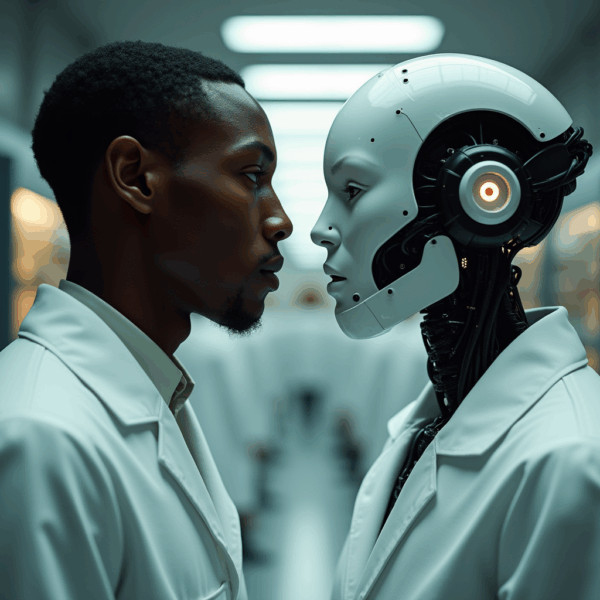
Alien agencies
Alien agencies are capacities exhibited by computational technologies that are alien to human thought, temporality, and spatiality.
As the digital media scholar Beatrice Fazi suggests, after the Turing Test much AI discourse has reflected a ‘simulative paradigm’ in which the “success” of machine intelligence is assessed by measuring how well computing systems are able to mimic human cognitive, sensorial, and perceptual capacities. Yet what may be most significant about current algorithmic architectures is their disregard for anthropocentric processes and experiences (Fazi, 2020: 2).
Discussions of “algorithmic culture”, for instance, address how statistical approaches such as single value decomposition (a factoring technique within linear Algebra), have enabled entertainment platforms like Netflix to “intuit” subtle human behaviours and latent correlations which operate ‘beyond human perception, language, and sense-making’ in order to optimise their recommendation algorithms (Hallinan and Striphas, 2016: 125).
From this perspective, machine learning innovations which endow AI with greater intuitive flexibility and generalisability do not seek to simulate human sensory, cognitive, or perceptual functions; instead, they hone computational capacities that may be incommensurable with them.
As the digital media theorist Luciana Parisi argues, ‘soft(ware) thought’ is not what ‘affords the mind new capacities to order and calculate’ or what ‘gives the body new abilities to navigate space’; rather, it involves the automated prehension of infinite data that cannot be fully compressed, comprehended, or sensed by totalities such as “the mind”, “the machine’”, or “the body” (2013: xviii).
“Artificial intuition” accordingly elaborates ‘visual information that humans cannot even receive or perceive’ and constructs ‘representations that are more relevant than those that any human computer could have identified’ (Fazi, 2020: 12) – while operating within durations outside of human time, space, or sense perception.