Intuitive expertise
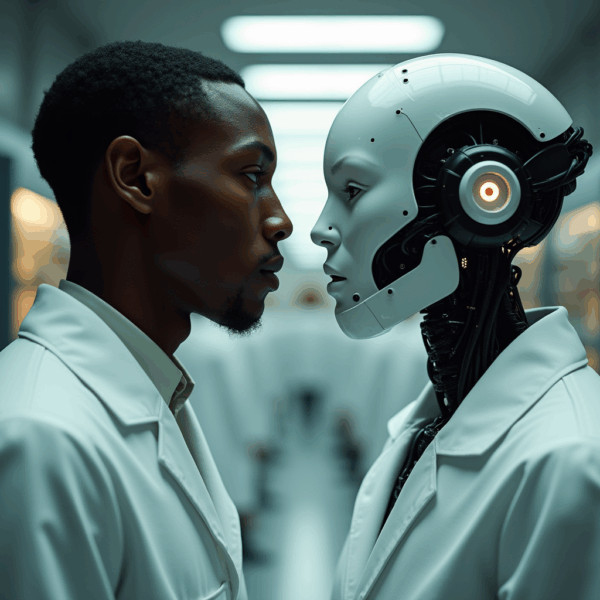
Intuitive expertise, as conceptualised by the philosopher of science Hubert Dreyfus, refers to tacit knowledge gained through experience, which he argued AI cannot replicate.
Between the 1930s to the 1980s, intuitive expertise consolidated across Britain and the United States as a honed capacity for pattern recognition enabling leaders to make effective decisions (Pedwell, 2023).
Scholarship on expertise across psychology, philosophy, cognitive science, and management studies has examined how ‘human experts, after years of experience, are able to respond intuitively to situations in a way that defies logic’ (Dreyfus and Dreyfus, 1988: xiv).
The growing adoption of personal computers in homes, schools, and workplaces from the early 1980s set the stage for enhanced theories of intuitive expertise amid growing public interest and anxiety concerning people’s changing relationships with “new” technologies.
Extending earlier cybernetic thinking, the psychologist and computer pioneer Herbert Simon held that the digital computer highlighted how, for human experts and AI systems alike, rapid and intuitive decision making depends on the honed recognition of ‘chunks or patterns stored in long term memory’ (1987: 61). The central task ahead, Simon contends, is to catalogue ‘the knowledge and cues used by experts in different kinds of managerial tasks’ so that this information can be automated by computers (1987: 39).
Others, however, were more wary of artificial ‘decision aids’ and ‘expert consultants’ (Simon, 1987: 61), as well as wider claims concerning the possibility of automated intuition.
In his 1985 book, Mind Over Machine: The Power of Human Intuition and Expertise in the Era of the Computer, for instance, Dreyfus famously argues that computers ‘can apply rules and make logical inferences at great speed and with unerring accuracy’, but lack ‘intuitive intelligence that enables us to understand, to speak, to cope skilfully with our everyday environment’ (Dreyfus and Dreyfus, [1985]1988: xx).
Dreyfus therefore questions the very possibility of automated intuition if intuition is, by definition, an embodied, visceral, and situated capacity – laying conceptual groundwork for future philosophers, sociologists, STS scholars, and digital media researchers to address the (im)possibilities of designing AI with real contextual awareness.