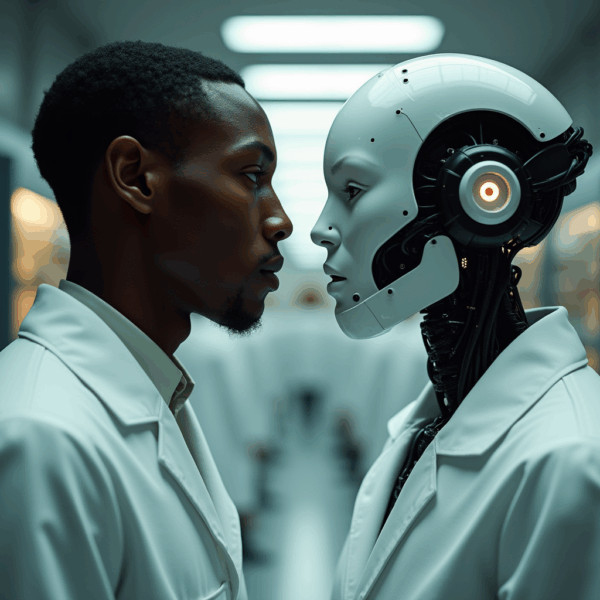
Sensory apparatus
Sensory apparatus refers to how humans and machines perceive environments, relevant to computer vision, neural networks, and “artificial intuition”.
While cyberneticians wanted to engineer what the mathematician Alan Turing called ‘thinking machines’, they also sought to transform how humans sensed and perceived the world through via their interactions with machines with ‘sensory organs’ (Wiener, 1948).
As the media historian Orit Halpern (2014) discusses, cybernetic thinkers like Norbert Weiner were concerned with refiguring perception, intuition, and the sensory apparatus within a post-war structure of feeling animated by new sensing technologies such as radar and digital computing.
In his best-selling 1948 book Cybernetics, Wiener writes about the need to cultivate a more-than-human mode of perception fit for the new digital age, which moves away from an Enlightenment preoccupation with taxonomy, precision, and rational analysis to produce a more intuitive ‘flow of ideas’ capable of deducing patterns.
Wiener’s new mode of perception is resonant with the philosopher Henri Bergson’s (1903) earlier account of intuition as a process of connecting with change as it unfolds. In contrast to Bergson, however, Wiener is interested in how intuition can be engineered into computers through breaking down its operations into discrete elements.
Today, proliferating sensor technologies underpinned by machine learning algorithms are transforming sensing practices through ‘ensembles of multiple humans and more-than-humans, environments and technologies, politics and practices’ (Gabrys, 2019: 273).
As the digital sociologist Jennifer Gabrys suggests, these practices (re)mediate sensing as ‘an ongoing and collaborative undertaking’ in ways that refigure ‘the traditional categories of expert, citizen and participation’ (2019: 276, 275) – and inform contemporary practices of “artificial intuition”.